US-FDA Approved Tech
Dr Charu Singh
Precision Surgical & Laser Removal

Mole Removal & Skin Check
Expert Examination Solutions.

Almost everyone has a few moles somewhere on their body, and most are completely harmless. Still, keeping an eye on them matters, since changes in a mole’s size, shape, or color can sometimes signal a deeper issue. Our clinic offers thorough mole evaluation and safe mole removal for growths that are cosmetically unwanted or medically concerning, backed by expert skin examination.

What Are Moles
Melanocyte Clustering

Pigment Spots & Formation

Understanding Your Skin

What Are Moles?

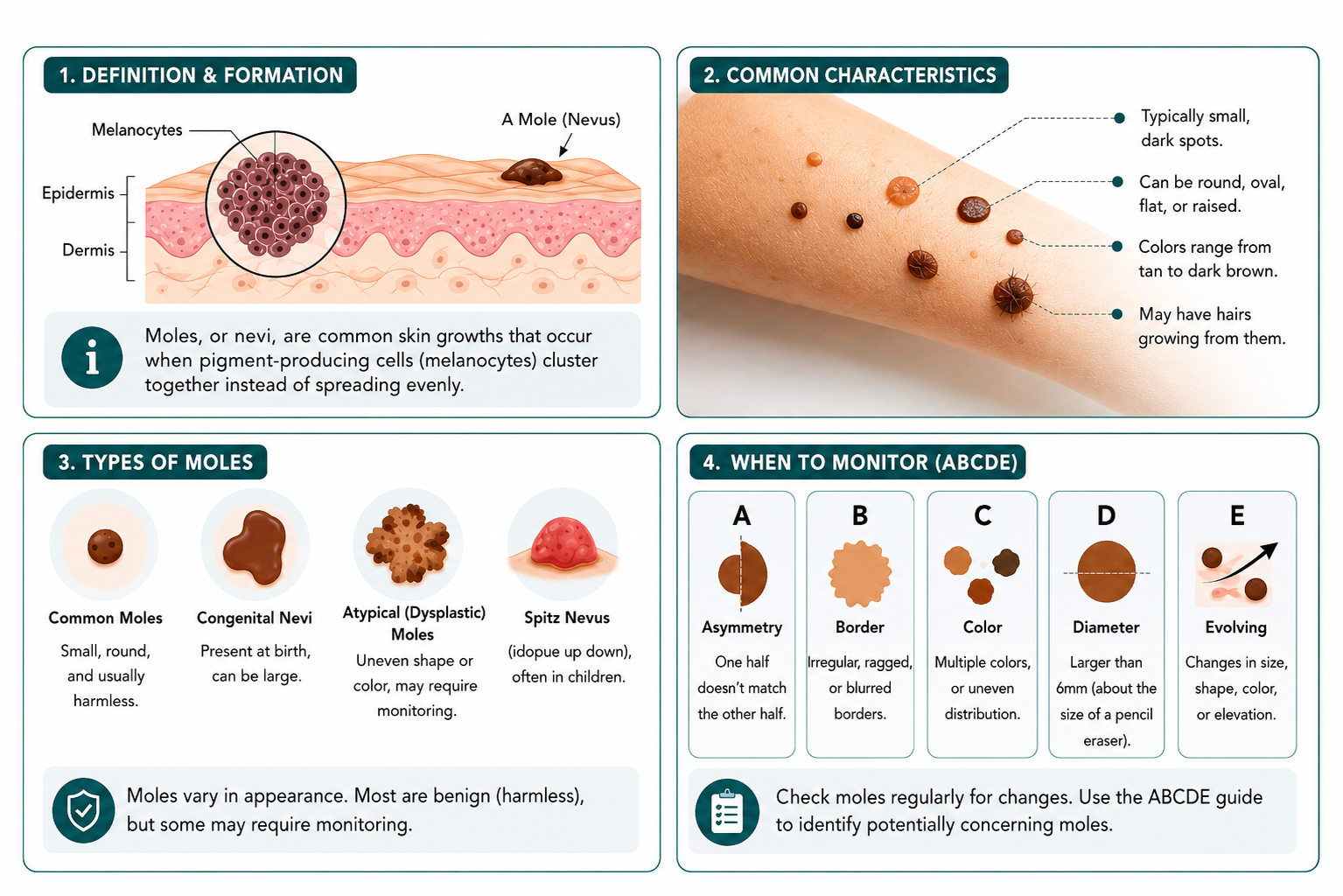
Moles form when melanocytes, the cells responsible for skin color, cluster together instead of spreading evenly through the skin. This creates a small, round or oval spot that can be brown, black, pink, or skin-toned. Moles can appear anywhere on the body and often develop during childhood, adolescence, or pregnancy, with sun exposure playing a role in how many appear over a lifetime.

Professional Insight:

"Our clinic offers thorough mole evaluation and safe mole removal for growths that are cosmetically unwanted or medically concerning, backed by expert skin examination."
Comprehensive Analysis

Types, ABCDE Rule & Removal Guidelines

Classifying mole variations, spotting warning signs, and identifying when removal is recommended.

Types of Moles

  • Congenital moles – present from birth, varying in size from small to very large
  • Acquired moles – develop later in life, often linked to sun exposure and genetics
  • Atypical or dysplastic moles – larger, irregular in shape or color, requiring closer monitoring
  • Junctional, compound, and dermal moles – classified by their depth within the skin layers

The ABCDE Rule for Checking Moles

  • Asymmetry – one half of the mole doesn't match the other
  • Border – edges that are blurred, notched, or irregular
  • Color – uneven shading or multiple colors within one mole
  • Diameter – larger than about 6 millimeters, roughly the size of a pencil eraser
  • Evolving – any noticeable change in size, shape, color, or texture over time

When Mole Removal Is Recommended

A mole shows signs matching the ABCDE warning checklist

Frequent irritation from clothing, jewelry, or shaving

Bleeding, itching, or tenderness without an obvious cause

Cosmetic preference to remove a visible or bothersome mole

A new mole appears suddenly after age 30

Professional Solutions

Mole Removal Treatment Options We Offer

Precise, minimally invasive techniques tailored to each mole's size and depth.

Shave Excision

Removes raised moles level with the surrounding skin safely and quickly.

Surgical Excision & Laser

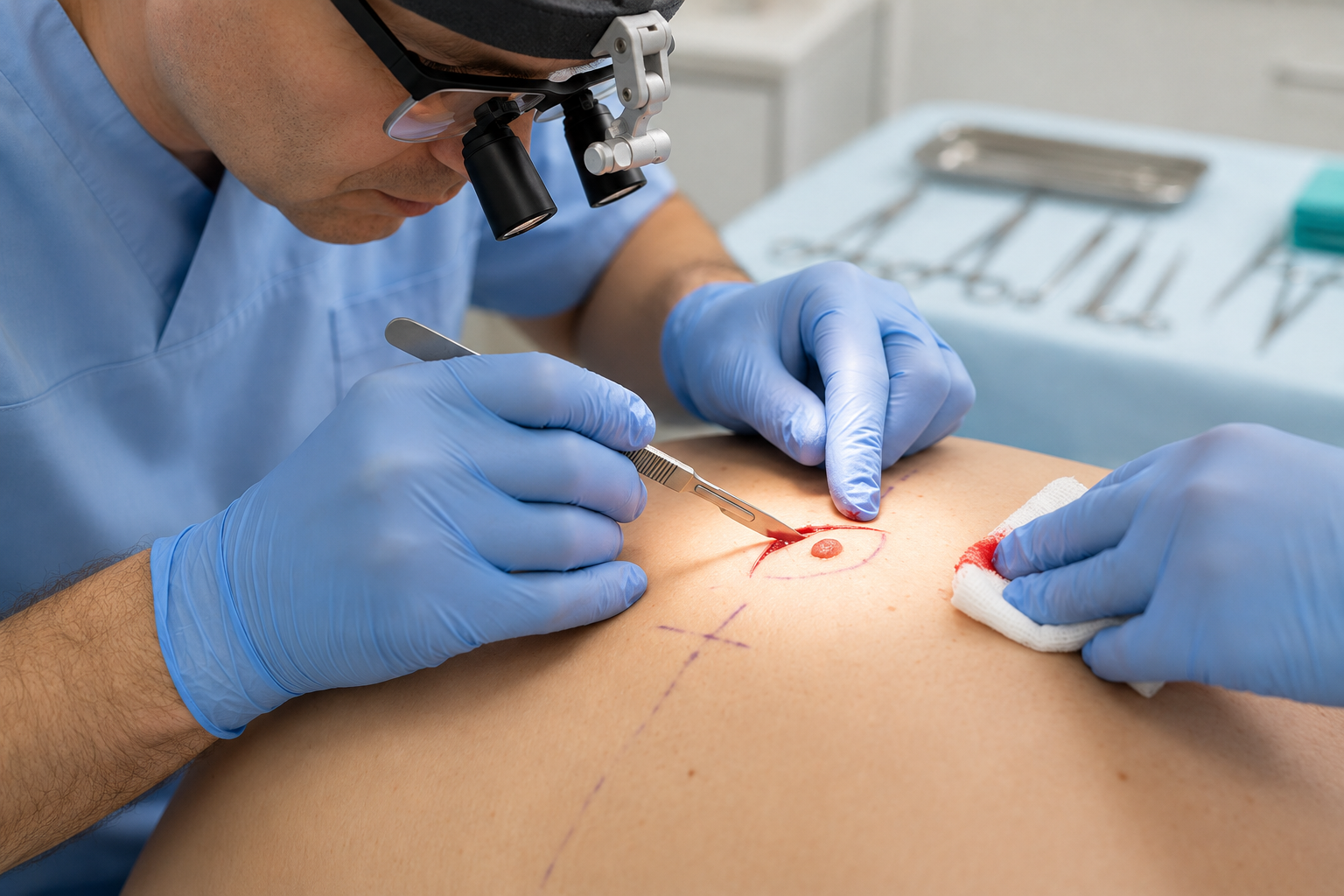
Cuts out the mole along with a margin of tissue for lab analysis, or utilizes laser removal for smaller, flat, non-suspicious moles.

Biopsy & Pathology Review

Examines removed tissue to confirm it is non-cancerous and ensure complete safety.

Why Choose Our Clinic

Why Choose Our Clinic

Every mole removal begins with a proper skin examination to rule out anything concerning before treatment. Our dermatologists use precise, minimally invasive techniques suited to each mole’s size and depth, helping reduce scarring while ensuring your skin health is thoroughly checked.

Expert Guidance

Frequently Asked Questions

Everything you need to know about mole necessity, removal pain, scarring, and check frequency.

No, most moles are harmless and can simply be monitored. Removal is usually recommended only for cosmetic reasons or medical concern.

Local anesthesia is used during the procedure, so discomfort during removal is minimal.

Some minor scarring is possible depending on the mole's size and depth, though techniques are chosen to minimize visible marks.

An annual skin check is generally recommended, or sooner if you notice any changes matching the ABCDE warning signs.
Schedule Your Consultation

Get your moles checked and safely removed if needed.

Book a consultation today with our skin specialists.

Mon - Sat: 10:00 AM - 8:00 PM | Sunday By Appointment