US-FDA Approved Tech
Dr Charu Singh
Platelet-Rich Plasma Scar Remodeling

PRP for Scars &
Natural Tissue Remodeling Solutions.

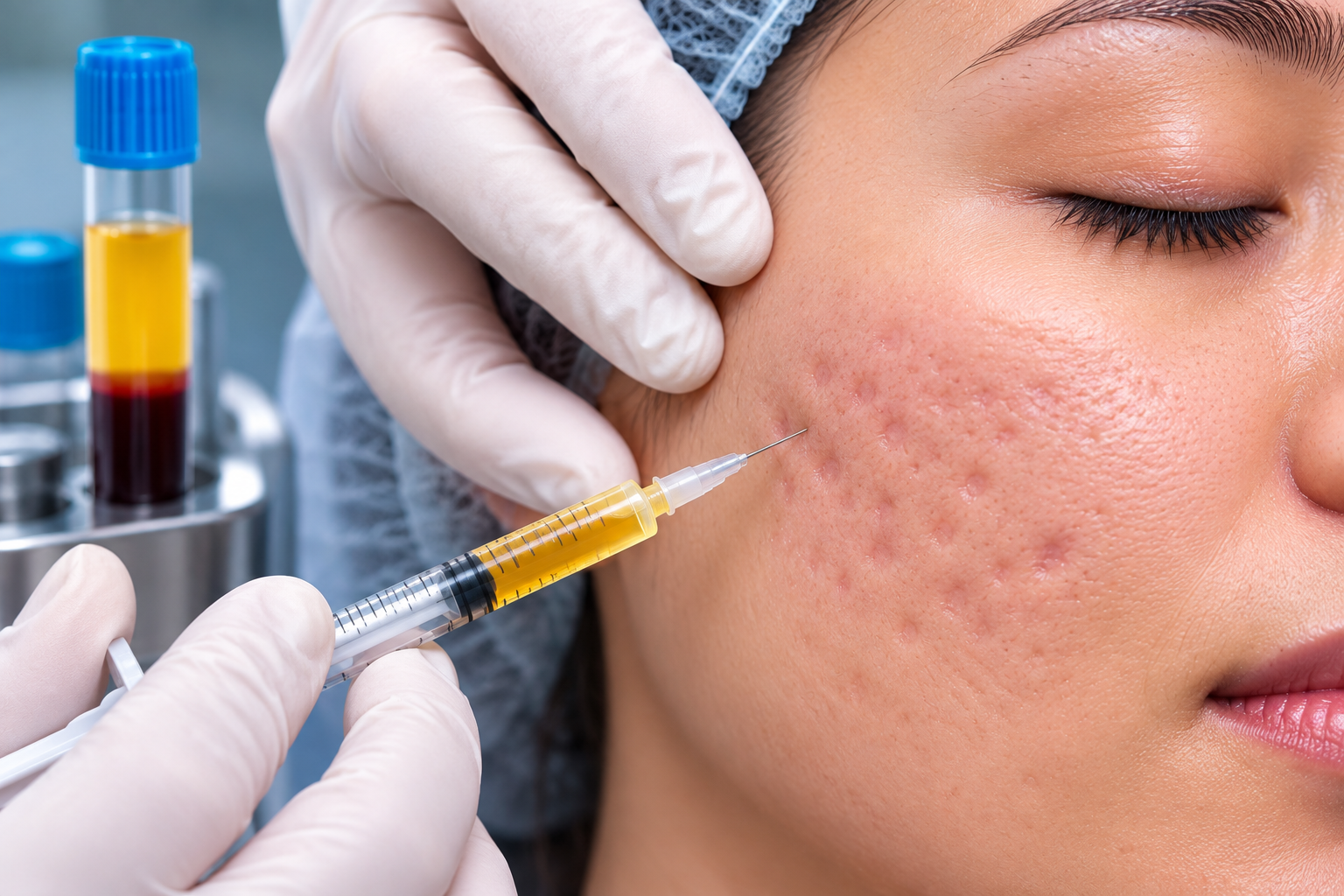
Scar tissue forms when the skin’s healing process leaves behind uneven texture or depressions, and correcting it often means encouraging the skin to rebuild itself more evenly. PRP, or platelet-rich plasma, uses concentrated growth factors from your own blood to support this natural rebuilding process, making it a valuable option for smoothing acne scars and other types of scarring. Our clinic offers PRP scar treatment tailored to your skin’s specific texture and depth of scarring.

How PRP Helps Improve Scar Tissue
Collagen Induction

Tissue Repair & Remodeling

Understanding The Science

How PRP Helps Improve Scar Tissue

PRP is created by drawing a small blood sample and processing it in a centrifuge to isolate the platelet-rich layer, which contains concentrated growth factors essential for tissue repair. When applied to scarred skin, often alongside microneedling, PRP stimulates collagen production and supports healthier tissue remodeling, gradually softening the appearance of depressed or uneven scars.

Professional Insight:

"Our clinic offers PRP scar treatment tailored to your skin’s specific texture and depth of scarring."
Comprehensive Analysis

Types of Scars, Combinations & Treatment Expectations

Exploring treatable scar classifications, pairing methodologies, and what to expect during sessions.

Types of Scars PRP Can Improve

  • Acne scars – including rolling and shallow boxcar-type scarring
  • Post-surgical scars – supports smoother healing and reduced visibility
  • Injury-related scars – improves texture from cuts or accidental trauma
  • Textured or indented scars – benefits from collagen-stimulating effects

Combined with Other Treatments

  • PRP with microneedling – most common pairing, enhancing collagen induction
  • PRP with laser resurfacing – supports faster healing after laser sessions
  • PRP with subcision – aids tissue repair after releasing bound-down scar tissue

What to Expect During Treatment

After a quick blood draw and processing, the concentrated PRP is applied to the scarred area, either through injection or spread across the skin following microneedling. Mild redness or swelling is common for a day or two afterward, with visible smoothing developing gradually over the following weeks as new collagen forms.

Professional Solutions

Customized Scar Assessment & Precision Care

Targeted evaluation matching your specific scar type, depth, and skin condition.

Thorough Scar Evaluation

Specialists assess scar type, depth, and skin condition to determine whether standalone PRP or combination approaches work best.

Tailored Treatment Plans

Ensures your treatment plan is matched precisely to the kind of scarring you’re dealing with for maximum efficacy.

Why Choose Our Clinic

Why Choose Our Clinic

Our specialists assess your scar type, depth, and skin condition before determining whether PRP alone or a combination approach will deliver the best improvement. This ensures your treatment plan is matched precisely to the kind of scarring you’re dealing with.

Expert Guidance

Frequently Asked Questions

Everything you need to know about session counts, scar type effectiveness, comfort, and results timeline.

Most treatment plans involve 3 to 4 sessions spaced several weeks apart, with results building gradually as new collagen forms.

It works particularly well for rolling and shallow scars, while deeper ice pick or boxcar scars often need to be combined with other procedures like subcision.

Numbing cream is typically applied beforehand, and any discomfort during treatment is generally mild.

Since results depend on collagen remodeling, visible improvement usually develops over 6 to 12 weeks following each session.
Schedule Your Consultation

Smooth scar tissue naturally with PRP therapy.

Book a consultation today to see if it's right for you.

Mon - Sat: 10:00 AM - 8:00 PM | Sunday By Appointment