US-FDA Approved Tech
Dr Charu Singh
Advanced Hormonal Pigment Management

Melasma Care & Targeted
Hormonal Pigment Solutions.

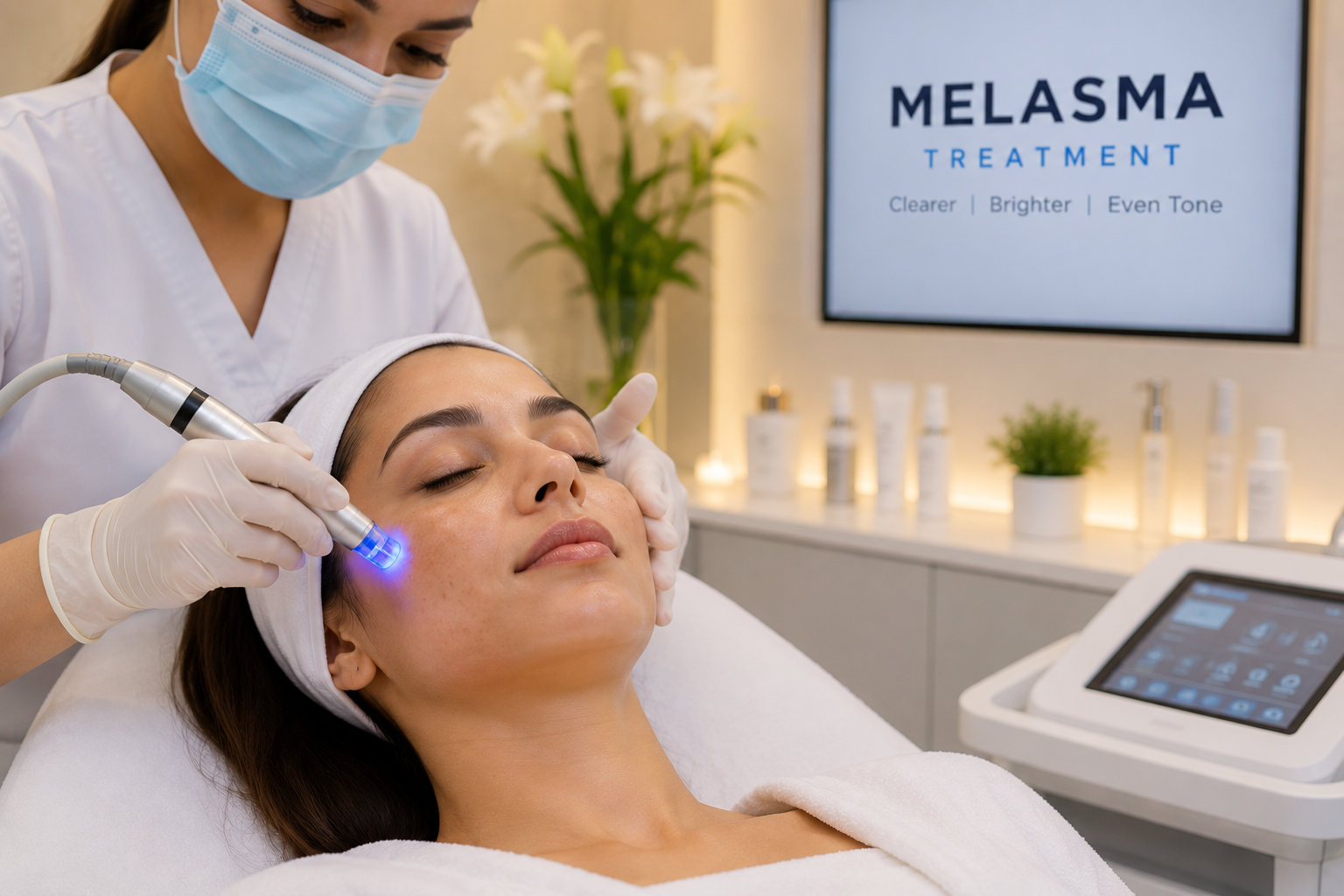
Symmetrical brown or grayish patches across the cheeks, forehead, or upper lip are the hallmark of melasma, a pigmentation condition that tends to be more persistent and harder to fully clear than ordinary sun spots. Closely tied to hormones and sun exposure, melasma often requires a patient, well-managed approach rather than a single quick fix. Our clinic provides dedicated melasma care built around long-term control and visible fading.

Understanding Melasma
Hormonal Melanocyte Activity

Symmetrical Pigment Patches

Understanding The Condition

Understanding Melasma

Melasma develops when pigment-producing cells become overactive in specific areas of the face, generating excess melanin that clusters into larger, often symmetrical patches. Unlike scattered freckles or isolated sunspots, melasma tends to appear as broader areas of discoloration and is strongly influenced by hormonal activity alongside sun exposure.

Professional Insight:

"Our clinic provides dedicated melasma care built around long-term control and visible fading."
Comprehensive Analysis

Triggers, Facial Patterns & Approach

Analyzing hormonal catalysts, distribution patterns, and why melasma requires specialized care.

What Triggers Melasma Flare-Ups?

  • Hormonal shifts – linked to pregnancy, birth control, or hormone therapy
  • UV & heat exposure – stimulating pigment-producing cells
  • Genetic tendency – family history of melasma
  • Skin irritation – from harsh products or procedures
  • Thyroid imbalances – underlying hormonal shifts

Where Melasma Appears

  • Centrofacial pattern – forehead, cheeks, nose, and upper lip
  • Malar pattern – concentrated across the cheeks and nose bridge
  • Mandibular pattern – distributed along the jawline
  • Dermal depth – can sit at varying skin depths, affecting treatment response

Why Melasma Requires a Different Approach

Because melasma is sensitive to both hormones and heat, overly aggressive treatments can sometimes trigger more pigmentation instead of less. Effective melasma care relies on gentler, cumulative techniques combined with strict sun avoidance, rather than a single intensive session expected to clear patches permanently.

Professional Solutions

Melasma Care Options We Offer

Prescription creams, chemical peels, low-intensity laser toning, and sun protection.

Prescription Creams & Peels

Gradually fades patches over consistent use with gentle chemical peels lightening surface pigment.

Intense Pulse Light

Uses controlled pulses of broad-spectrum light to target excess pigmentation, helping reduce melasma.

Sun Protection & Maintenance

Daily broad-spectrum sunscreen and ongoing maintenance plans to prevent melasma from resurfacing.

Why Choose Our Clinic

Why Choose Our Clinic

Our dermatologists assess your melasma’s pattern, depth, and likely triggers before recommending a measured treatment plan. This careful approach reduces the risk of worsening pigmentation while working steadily toward a clearer, more even complexion.

Expert Guidance

Frequently Asked Questions

Everything you need to know about difficulty in treatment, natural fading, sunscreen importance, and timelines.

Because it's driven by hormones and heat, melasma responds more slowly and can worsen with aggressive treatment, requiring a gentler, longer-term approach.

In some cases, particularly pregnancy-related melasma, it can fade naturally afterward, though many patients still need treatment for it to clear fully.

Extremely important. Daily broad-spectrum sunscreen is one of the most critical factors in preventing melasma from worsening or returning.

Visible lightening often begins within 6 to 8 weeks, though full improvement can take several months of consistent care.
Schedule Your Consultation

Manage melasma with a gentle, effective, long-term care plan.

Book a consultation today.

Mon - Sat: 10:00 AM - 8:00 PM | Sunday By Appointment